How Many Calories Does Kayaking Burn? Fitness Guide
How many calories does kayaking burn? For a 70 kg adult, moderate paddling is roughly 350 calories an hour using a standard activity estimate. Your weight, effort and time actually paddling change the result. So if you’re looking for a fun way to get in shape and burn calories, kayaking could well be the answer to your fitness prayers!
How many calories does kayaking burn per hour?
As an experienced kayaker and fitness enthusiast, I can personally vouch for the calorie-burning power of paddling.
Read on as in this article we’ll discuss and answer the two main topics of How Many Calories Does Kayaking Burn? and How quickly does Kayaking Burn Calories?
So, without waiting further, Let’s dive right in and examine these topics in depth together, shall we?
The 2024 Compendium of Physical Activities rates moderate kayaking at 5 METs, a measure of exercise intensity. A useful rough calculation is calories ≈ MET × body weight in kilograms × hours.
- 60 kg: about 300 calories for an hour of moderate paddling.
- 70 kg: about 350 calories for an hour, or 175 for half an hour.
- 80 kg: about 400 calories for an hour.
- 90 kg: about 450 calories for an hour.
These are gross estimates, including the energy you would use at rest. They are not a personal measurement, and time drifting or taking breaks should not be counted as continuous moderate paddling.
What affects your calorie burn?
The 350-calorie example is an estimate, not a promise. The exact number – FOR YOU – is going to be determined by several factors in any kayaking session.
These include paddling speed, intensity, and your current weight.
The more intense your paddling, the more calories you’ll burn. But don’t worry, we’ve got some tips on how to maximise your kayak calorie-burning potential while out on the water.
An aerobic workout
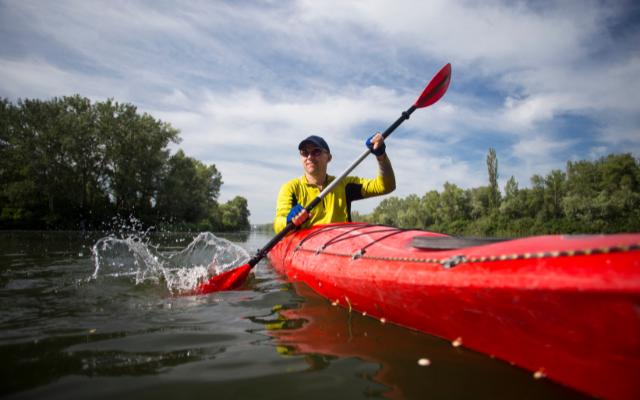
Kayaking provides an excellent aerobic workout, which is essential for burning calories and improving overall health.
When you engage in aerobic exercise, your heart rate increases and your body uses oxygen more efficiently.
As a result, you burn more calories, strengthen your cardiovascular system, and improve your endurance.
Kayaking, similar to other water sport pursuits, is a pastime that can be incredibly aerobic no matter what your fitness level.
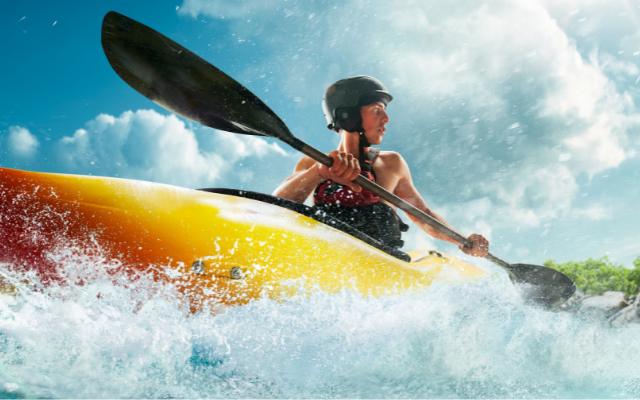
Which muscles does paddling work?
One of the reasons kayaking burns so many calories is that it engages multiple muscle groups for an all over body workout.
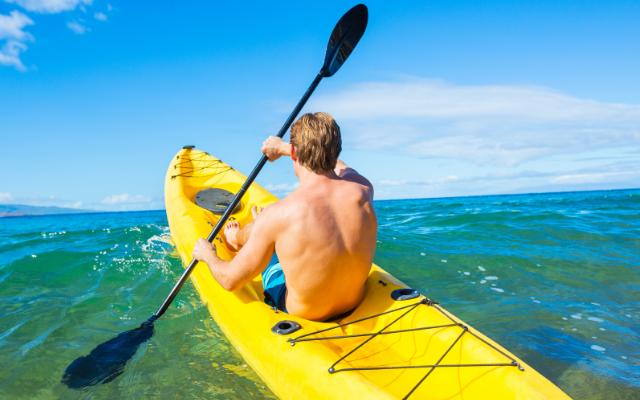
When you paddle, you work your back, shoulders, arms, and core. The more muscles you use, the more calories you burn.
And trust me, we’ve seen the difference – kayaking can help sculpt a lean, toned physique while torching calories with ease.
Paddling pace and interval training
Varying the intensity of your kayaking sessions can significantly affect the number of calories you burn.
For example, a leisurely paddle around a calm lake won’t burn as many calories as an intense session navigating rapids or racing against the clock.
To maximise calorie burning, try incorporating interval training into your kayaking sessions if you have the time to do so.
Paddle at a moderate pace for a few minutes, then crank up the intensity for a short burst before returning to a more relaxed pace.
Repeat this pattern throughout your workout to keep your heart rate elevated and burn more calories.
How long should you paddle?
The longer you kayak, the more calories you’ll burn.
Gradually increase the duration of your kayaking sessions to maximise calorie burning and improve your endurance.
Start with shorter sessions and work your way up to longer adventures.
Remember, consistency matters. The NHS recommends at least 150 minutes of moderate aerobic activity a week plus strength activities on two days for general adult health. Kayaking can contribute, alongside other activities you enjoy.
How different types of paddling compare
Intensity plays a significant role in the number of calories you burn during a kayaking session.
Low-intensity paddling in calm waters may burn fewer calories, while higher-effort paddling can use more energy; increase effort on suitable water rather than seeking hazardous conditions. Here’s a breakdown of the different kayaking intensities:
Recreational kayaking: an easy outing with pauses may use less energy than the moderate-paddling estimate above.
Touring kayaking: steady, sustained paddling can give you a useful aerobic workout; your effort and active paddling time matter more than the label.
Sea kayaking: calm coastal touring and a demanding sea trip are very different workouts, so there is no reliable single calorie figure for every sea-kayaking hour.
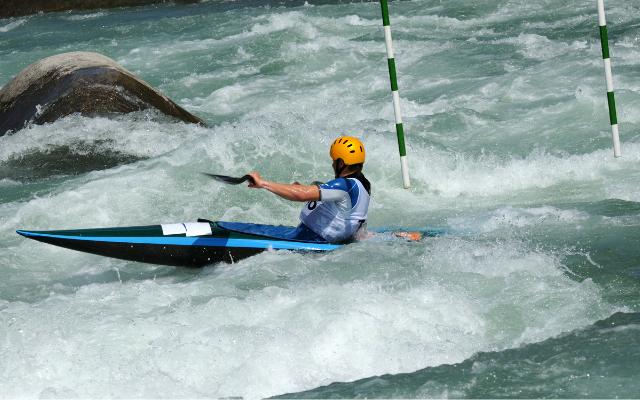
White-water kayaking: bursts of effort, waiting and recovery vary between trips. Rapids do not automatically mean you burn 600–800 calories an hour.
So, by adjusting your kayaking intensity and duration, you can tailor your workout to achieve your fitness goals.
Remember to combine kayaking with a healthy diet and other forms of exercise to maximise your calorie-burning potential and overall health.
Fitness tips for your next paddle
Now that we’ve covered the calorie-burning potential of kayaking, here are some kayaking fitness tips to help you get the most out of your paddling sessions.
- Warm-up: Always start your kayaking session with a warm-up. Stretch your arms, shoulders, and back to prepare your muscles for the workout ahead.
- Proper technique: Focus on maintaining proper paddling form to engage the right muscle groups and prevent injuries. Remember, it’s all in the torso rotation!
- Stay hydrated: Bring plenty of water and snacks to keep your energy levels up. Paddling can be thirsty work!
- Track your progress: Use a kayak calorie calculator or fitness tracker for rough trends, not exact calories burned.
- Switch it up: To prevent boredom and plateaus, mix up your kayaking routine with different routes, intensities, and types of water.
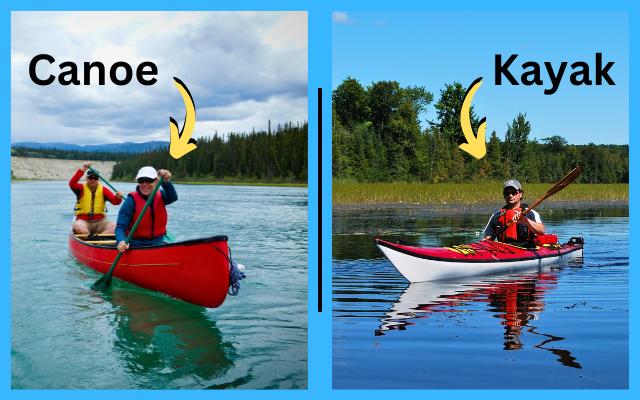
Looking for a relaxed place to put those paddles to work? Our Marlow guide describes a favourite Thames destination. If you are choosing a craft, see kayaking versus canoeing for the practical differences.
Getting fit while having fun
So, there you have it – kayaking is a fantastic way to burn calories and get in shape while having a blast on the water.
By challenging yourself with different intensities and paddling techniques, you can make your kayaking sessions even more effective in torching those calories.
Plus, it’s a brilliant opportunity to enjoy nature, unwind, and make lifelong memories with friends and family all the while keeping fit.
So come on, get out there, grab a paddle, and see for yourself what a rewarding and healthy activity kayaking can be!
I’m Mark, enthusiastic paddler and owner of Kayak Mad! Find out more about me and Kayak Mad.
FAQs: how many calories does kayaking burn
How many calories does kayaking burn in an hour?
Using a rough 5-MET moderate-kayaking estimate, a 70 kg adult uses about 350 calories in an hour. Weight, effort, breaks and individual metabolism affect the actual total.
How many calories does 30 minutes of kayaking burn?
At the same moderate effort, a 70 kg adult has a rough gross estimate of 175 calories in 30 minutes. Count active paddling time rather than the whole outing.
Does kayaking burn more calories than walking?
It depends on your weight and the pace of each activity. There is no fixed 20–25% advantage for kayaking over every kind of walking.
Does sea kayaking always burn more calories?
No. A relaxed sea paddle and a demanding coastal trip involve different effort. Estimate by intensity, body weight and active time rather than assuming one number for all sea kayaking.