Kayaking vs Canoeing: Differences & Which to Try
Kayaking vs canoeing: the main differences
Kayaking and Canoeing are two popular water sports that are often confused with each other and as such, Kayaking Vs Canoeing comparisons are constantly made.
Both involve paddling a small watercraft, but the differences between the two are significant.
Understanding the differences between kayaking and canoeing can help you choose the right activity for your interests and skill level.
So, in this Kayaking Vs Canoeing Guide we aim to point out, in layman’s terms, the key differences of each pursuit and hopefully that’ll assist in your decision as to which you might like to have a go at.
We hope you enjoy the read. Let’s go!
What do kayaking and canoeing mean?
What is kayaking?
Kayaking is a water sport that involves using a kayak (funnily enough) to move across water.
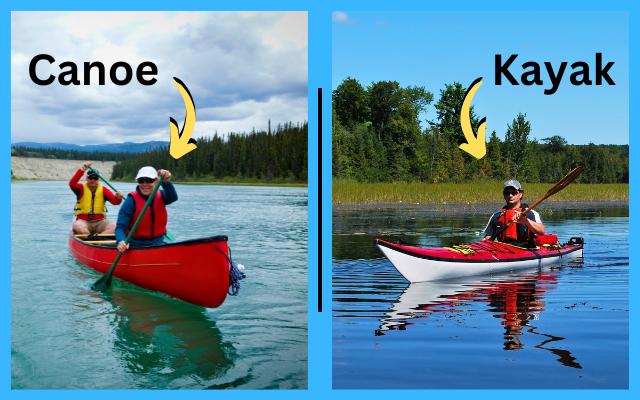
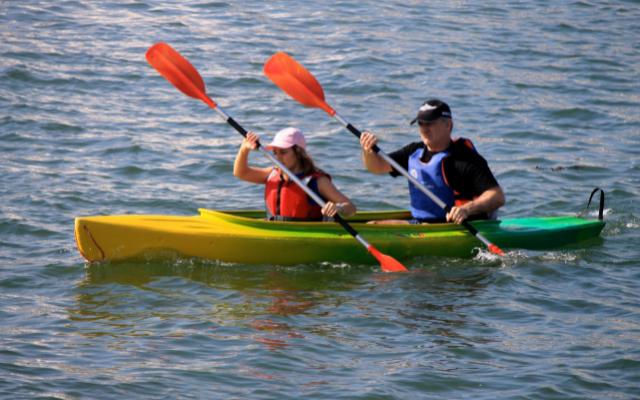
- A kayak is a narrow and small watercraft that is propelled using a double-bladed paddle.
- Most Kayaks have a closed cockpit where the kayaker sits with their legs stretched out in front of them.
- Kayaks are designed to be fast and manoeuvrable, making them ideal for white water rapids, sea kayaking, and touring.
- Kayaking can be done for leisure, competition, or as a means of transportation.
- Kayaking is a popular activity for adventure seekers, nature lovers, and fitness enthusiasts.
- Kayaking can be enjoyed alone or in a group, and there are different types of kayaks available for different purposes.
Kayaking Fitness Explained
Find out more about the health benefits of Kayaking here in this article entitled HOW MANY CALORIES DOES KAYAKING BURN?
What is canoeing?
Canoeing is a water sport that involves using a canoe (funnily enough) to move across water.
- A canoe is a wider and larger watercraft that is propelled using a single-bladed paddle.
- Canoes have an open top where the canoeist sits either on a bench or on the bottom of the boat.
- Canoes are designed to be stable and efficient, making them ideal for calm waters, lakes, and rivers.
- Canoeing can be done for leisure, competition, or as a means of transportation.
- Canoeing is a popular activity for families, couples, and groups.
- Canoeing can be enjoyed alone or in a group, and there are different types of canoes available for different purposes.
In summary, when considering Kayaking Vs Canoeing, both are enjoyable water sports that offer different experiences.
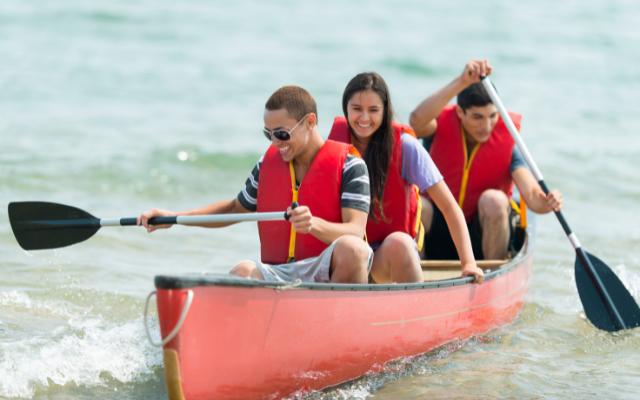
Kayak or canoe: a quick comparison
- Paddle: usually two blades for a kayak and one blade for a canoe.
- Position: seated low in a kayak; seated higher or kneeling in a recreational canoe.
- Space: an open canoe often offers handy room for companions and camping gear; kayak storage varies by design.
- First try: compare comfort, getting in and out, and the route you want to paddle.
Paddle UK’s discipline guide shows how varied both sports can be. For canoe steering, the open canoe coaching handbook explains techniques including the J-stroke.
The practical differences
The boat
One of the most significant differences between kayaking and canoeing is the type of boat used.
Kayaks are typically closed-top boats that are designed for one or two people.
They are designed to sit lower in the water than canoes, which tend to have higher sides.
In contrast, canoes are usually open-top boats that can accommodate more people and gear.
They are often used for recreational paddling, fishing, and camping trips.
The paddle
Another main difference between kayaking and canoeing is the type of paddle used.
Kayakers use a double-bladed paddle, while canoeists use a single-bladed paddle.
How you sit
The differences in paddles is because kayakers sit in a low position with their legs stretched out in front of them, while canoeists typically kneel or sit on a raised seat with their feet flat on the bottom of the boat.
The different seating positions require different types of paddles to be used effectively.
Speed, manoeuvrability and stability depend on the particular boat and its purpose, rather than every kayak being faster or every canoe being more stable.
Both activities can be enjoyed by people of all ages and skill levels, and there are different types of equipment available for different purposes.
A closer look at boat design
When it comes to design and structure of Kayaks Vs Canoes there are also some key differences and in this section we’ll explore both in a bit more depth for both types of boats.
Kayak design
Kayaks are sleek, narrow boats that are typically designed for one or two people.
They are often made from lightweight materials such as fibreglass, plastic, or Kevlar.
Different kayaks are designed for different jobs, from touring on open water to turning quickly in rapids.
The cockpit of a kayak is typically enclosed, with the paddler sitting low in the boat.
An enclosed cockpit and suitable spraydeck can help keep water out; sit-on-top kayaks have an open seating area instead.
Kayaks are propelled using a double-bladed paddle, which allows for greater control and manoeuvrability.
Canoe design
Canoes are wider and more open than kayaks, and are typically designed for two or more people.
They are often made from materials such as wood, aluminium, or fibreglass.
Canoes are designed to be stable and sturdy, making them ideal for use on calm lakes and slow moving rivers.
The open design of a canoe allows for greater cargo capacity and easier entry and exit.
Canoes are propelled using a single-bladed paddle, which requires a different technique to that used in kayaking.
In summary, a touring kayak and a family open canoe can feel very different, but compare the actual boats rather than relying on a blanket rule about speed or stability.
The design of each type of boat is suited to its intended purpose, whether that be navigating rapids or exploring calm waters.
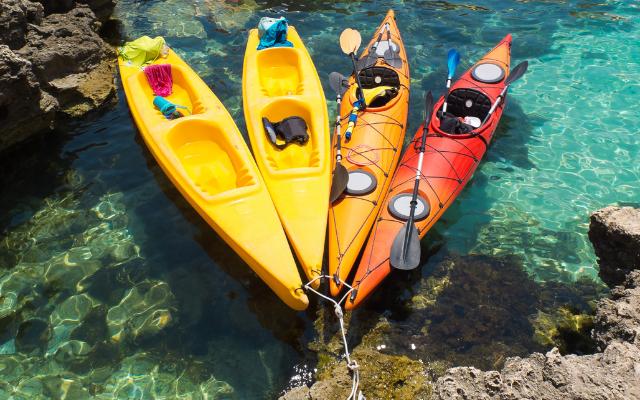
How paddling techniques differ
Using a kayak paddle
Kayaking involves using a double-bladed paddle to propel the kayak forward.
The paddler sits on the floor of the kayak with their legs stretched out in front of them.
To paddle, the kayaker should hold the paddle with both hands, ensuring that their hands are shoulder-width apart.
The paddler should then dip the blade of the paddle into the water, pulling it back towards their hip while rotating their torso to generate power.
Recover the blade for the next stroke. You can paddle on one side using a steering stroke such as a J-stroke; switching sides is another option, not a requirement after every stroke.
When paddling in a kayak, it is important to keep the paddle close to the kayak to ensure maximum efficiency.
The paddler should also aim to keep their strokes smooth and even to maintain a consistent speed.
A good paddling technique in kayaking involves using the large muscles in the torso to generate power, rather than relying solely on the arms.
Using a canoe paddle
Canoeing involves using a single-bladed paddle to propel the canoe forward.
In a recreational canoe, the paddler usually sits on a raised seat or kneels. The one-knee stance is associated with sprint canoeing, rather than being the standard for every canoe trip.
Hold a canoe paddle with one hand on the top grip and the other on the shaft, using a comfortable reach.
The paddler should then dip the blade of the paddle into the water, pulling it back towards their hip while rotating their torso to generate power.
Recover the blade for the next stroke. You can paddle on one side using a steering stroke such as a J-stroke; switching sides is another option, not a requirement after every stroke.
When paddling in a canoe, it is important to keep the paddle close to the canoe to ensure maximum efficiency.
The paddler should also aim to keep their strokes smooth and even to maintain a consistent speed.
A good paddling technique in canoeing involves using the large muscles in the torso to generate power, rather than relying solely on the arms.
Overall, both kayaking and canoeing require good paddling techniques to ensure maximum efficiency and speed.
By using the large muscles in the torso to generate power, paddlers can maintain a consistent speed and reduce the risk of injury.
Which suits your plans?
Another of the significant differences between kayaking and canoeing is their intended use.
When a kayak makes sense
Kayaks are designed for speed, agility, and maneuverability.
They are ideal for navigating through rapids, small streams, and narrow waterways.
Kayaks are also perfect for exploring the open sea, lakes, and calm rivers.
They are designed to be fast and responsive, making them perfect for racing and other competitive events.
Kayaks come in different shapes and sizes, and each type is designed for a specific purpose.
For example: Whitewater kayaks are designed for navigating through rapids, while touring kayaks are designed for long-distance paddling.
Sit-on-top kayaks are perfect for beginners and are easy to use.
When a canoe makes sense
Canoes are designed for stability, comfort, and storage.
They are ideal for carrying large amounts of gear and are perfect for long-distance trips.
Canoes are also perfect for fishing, bird watching, and other leisurely activities.
Canoes come in different shapes and sizes, and each type is designed for a specific purpose.
For example: recreational canoes are designed for leisurely paddling, while touring canoes are designed for long-distance paddling. Whitewater canoes are designed for navigating through rapids.
In summary, both kayaks and canoes have recreational, touring and performance designs. Think about your route, comfort, companions and the gear you want to carry.
Both paddle sports are suitable for different activities, and the choice of Kayaking Vs Canoeing for each individual really depends on the intended purpose.
Staying safe on the water
Kayaking and canoeing can be fun and exciting activities, but they can also be dangerous if proper safety precautions are not taken.
Both sports involve being on the water, and there are inherent risks associated with this.
In this section, we will discuss the safety considerations and risks associated with kayaking and canoeing.
Things to consider in a kayak
When kayaking, safety should always be a top priority.
Kayakers should always wear a properly fitting personal flotation device (PFD) to ensure they stay afloat in the event of an accident.
It’s also important to wear appropriate clothing for the conditions, such as a wetsuit or drysuit in cold water.
Additionally, kayakers should always be aware of their surroundings and any potential hazards in the water.
Kayakers should also be aware of the risks associated with whitewater kayaking, which involves navigating rapids and other fast-moving water.
This can be a very dangerous activity, and kayakers should only attempt it if they have the necessary skills and experience.
It is also important to have a safety plan in place in case of an emergency.
Things to consider in a canoe
Like kayaking, canoeing also involves certain safety considerations.
Canoeists should always wear a properly fitting PFD and appropriate clothing for the conditions.
They should also be aware of their surroundings and any potential hazards in the water.
One risk associated with canoeing is capsizing.
If a canoe capsizes, it is important to know how to perform a self-rescue or assist others in the water.
Canoeists should also be aware of the risks associated with cold water immersion, which can lead to hypothermia.
Overall, both kayaking and canoeing can be safe and enjoyable activities if proper safety precautions are taken.
It’s important to be aware of the risks associated with each activity and to take steps to mitigate those risks.
By following proper safety protocols, kayakers and canoeists can enjoy these activities while minimising the risk of injury or accidents.
Our final thoughts
In conclusion, while kayaking and canoeing share many similarities, there are some key differences that set them apart.
Understanding these differences can help individuals choose which activity is best suited for their interests and skill level.
We’ve obviously tried both paddling pursuits ourselves here at Kayak Mad and honestly, we love doing both.
Either sport can be relaxed or adrenaline-filled: it depends on the boat, the water and the trip you choose.
A leisurely paddle taking in the scenery is possible in both, just as both have challenging white-water and competitive disciplines.
Ultimately, the choice between kayaking and canoeing comes down to personal preference and the type of experience an individual is looking for.
Both activities offer a great way to explore the great outdoors and get some exercise while doing so.
With the right equipment and training, anyone can enjoy the thrill of paddling on the water.
Stay safe, happy paddling, and thanks for reading!
I’m Mark, enthusiastic paddler and owner of Kayak Mad! Find out more about me and Kayak Mad.
FAQs: kayaking vs canoeing
Is it easier to kayak or canoe?
Many beginners find a double-bladed kayak paddle straightforward to start with, but neither craft is always easier. Boat design, comfort, instruction and conditions make a big difference.
Can I kayak if I have never canoed before, and vice versa?
Yes, both kayaking and canoeing can be enjoyed by beginners without prior experience. Each offers a unique learning curve, and you can choose based on your preferences and interests.
Which requires less upper-body strength, kayaking or canoeing?
Neither has a universal advantage. Efficient technique in both uses torso movement rather than just pulling with the arms; boat weight, paddle fit, wind and pace affect effort.
Are there specific safety considerations for kayaking and canoeing?
Wear a suitable buoyancy aid and learn recovery skills for your boat and conditions. Rolling is useful in some closed-cockpit disciplines, but it is not a prerequisite for every recreational kayak outing.
Which is easier for older paddlers: kayaking or canoeing?
Try both in a supported session. Seat comfort, flexibility, getting in and out, carrying the boat and a suitable route matter more than age alone. Neither design is automatically easier on every paddler’s joints.